CINECO
Curated cinema from the archive, shared with the collective.
About the project
Beyond Human Design
We were asked to design a tool that raises awareness about the environmental impact of digital activities, as part of the Digital (Un)sustainable: Beyond Human Design project. The goal was to create a concept that could educate, inspire, and influence users or stakeholders toward more climate-conscious digital practices.
My Role
I was involved in every stage of the project, from initial research to the final concept and testing, but with a key focus on UI development and Figma prototyping.
Design Methods
Secondary research, Literature review, User survey, Iterative prototyping, User testing, Experience prototyping, and Ethical reflection.
Project Team
Tamar Kutalia, Geetanjali Khanna
Coaching provided by
Djujan Bijstra - Informaat
Challenge
Problem Statement
Most modern streaming platforms are designed around constant engagement, convenience, and high-resolution autoplay resulting in significant energy consumption and contributing to the growing environmental impact of digital media. At the same time, culturally valuable public domain films remain buried in hard-to-navigate archives, disconnected from contemporary audiences.
Outcome
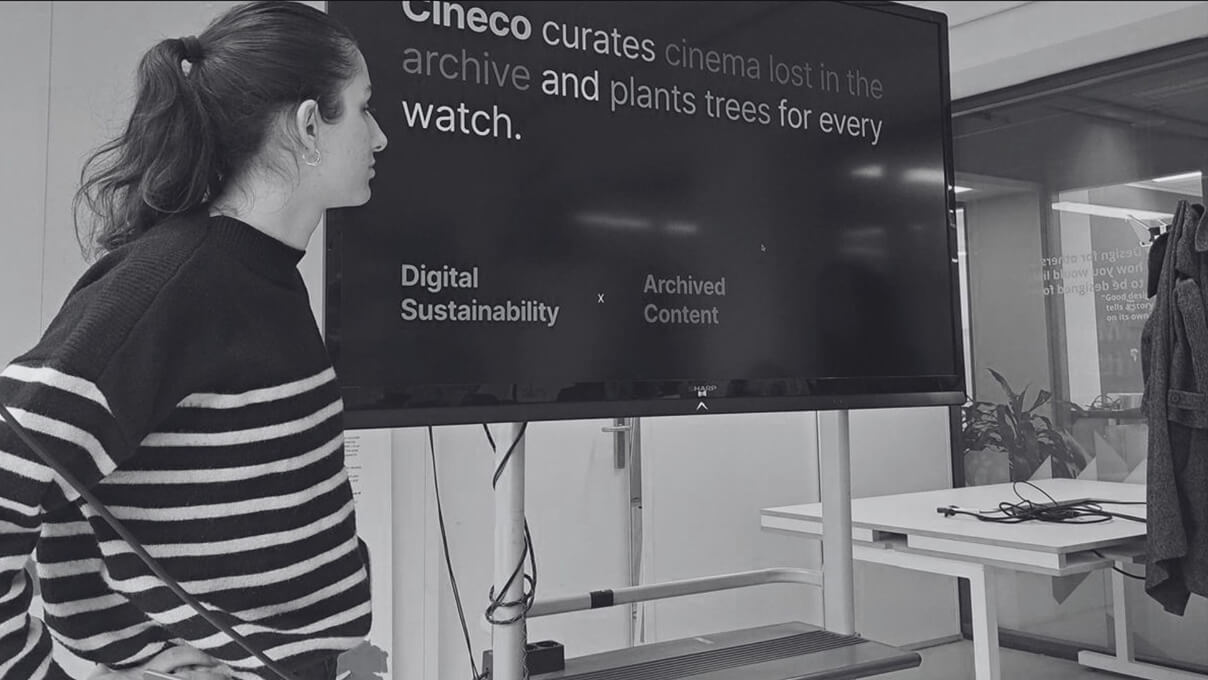
Cineco is a curated, climate-conscious streaming platform that reimagines how we engage with film — slower, more socially, and with environmental care. Built around four core values — Digital Sustainability, Cultural Preservation, Prosocial Design, and Conscious Consumption — Cineco promotes downloading over repeat streaming, removes autoplay, and fosters shared viewing experiences. Its curated collections highlight public domain cinema in an accessible, reflective way, helping users reconnect with cultural heritage while reducing digital emissions. By encouraging thoughtful interaction and collective watching, Cineco offers an ethical alternative to mainstream streaming, where design supports both user experience and planetary well-being.
Research and explore
Concept Exploration
Streaming video significantly contributes to the environmental impact of digital activity, yet most users remain unaware of the footprint behind everyday streaming habits. Through research, we explored how digital consumption, energy use, and content production shape the sustainability challenges of modern streaming platforms.
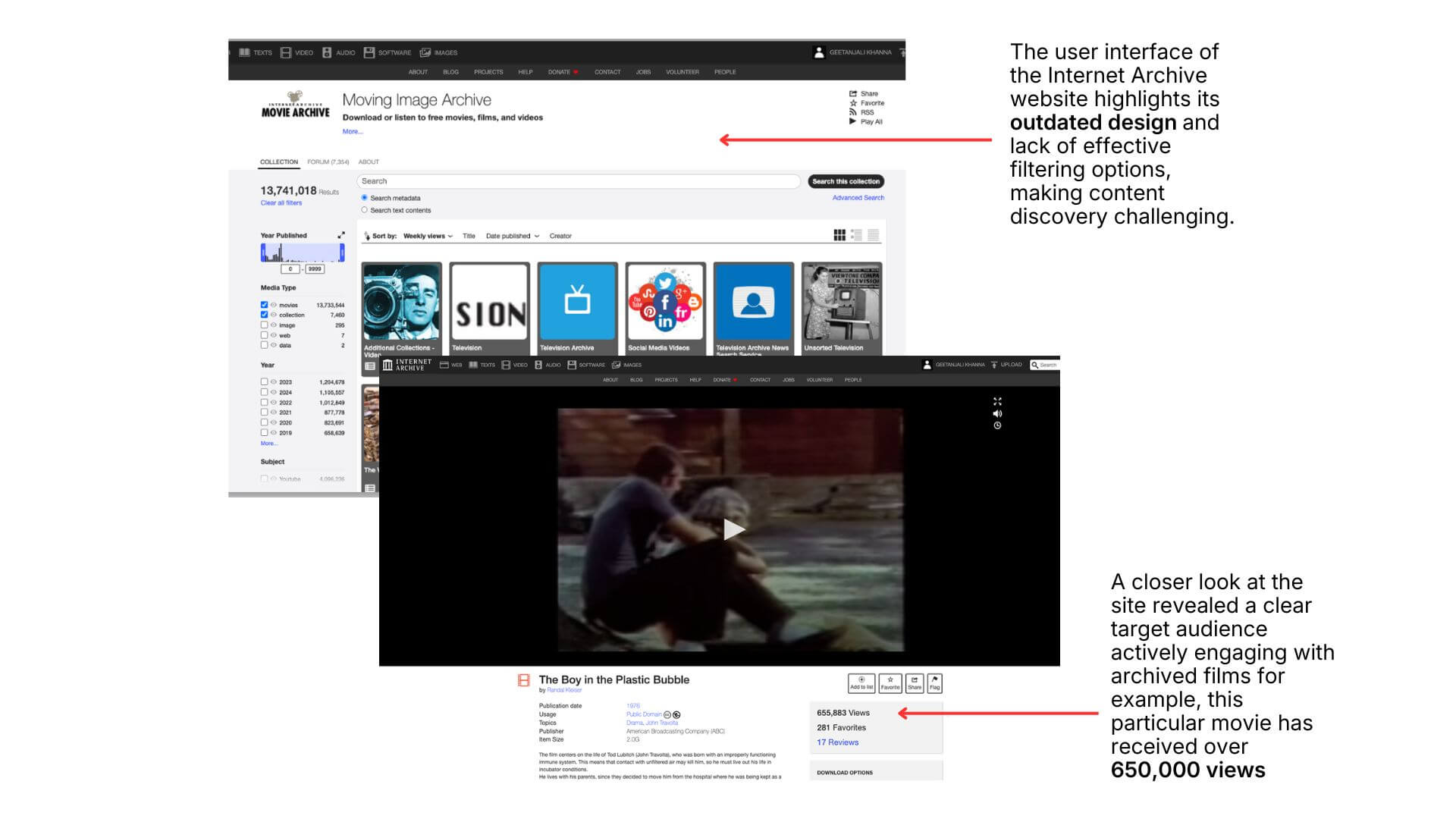
At the same time, we uncovered an overlooked opportunity within public domain cinema — culturally valuable films hidden behind outdated and inaccessible experiences. Cineco reimagines this space through thoughtful curation, sustainable design, and meaningful digital experiences.
Initial Concept
Initial Concept Failed?
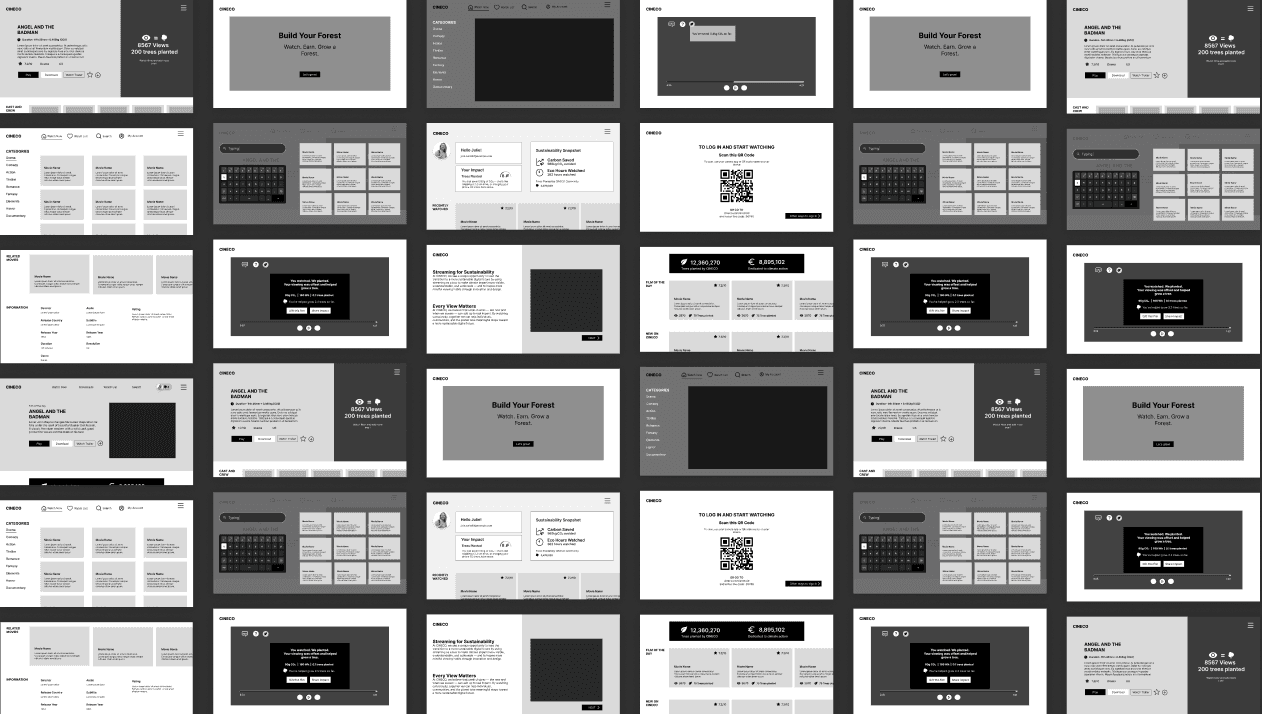
Cineco initially explored gamified features such as tokens, tree-planting rewards, and eco-points to encourage sustainable behavior. However, prototype testing with five participants radically shifted our direction.
While users appreciated the platform’s sustainability goals, several participants raised concerns that tree-planting incentives felt disconnected from the film-watching experience and risked being perceived as greenwashing. This insight led to a significant pivot from incentive-driven design to a value-driven approach grounded in shared meaning, ethics, and community.
Testers valued Cineco’s emphasis on interactive and community-based features — a sharp contrast to the passive experience offered by most TV platforms. This feedback confirmed that a web-based version would better support the social and participatory aspects of the Cineco experience.
Another key insight was the general lack of awareness about public domain films. This validated our core design mission: to resurface culturally valuable, copyright-free works and make them accessible through a well-curated platform.
This stage of the project shifted my mindset from “how can we make sustainability fun?” to “how can we make it meaningful and communal?” I developed a design approach rooted in ethical reflection — particularly a utilitarian perspective — combined with user empathy and iterative testing. This experience reshaped how I evaluate impact: not by engagement metrics, but by cultural impact, emotional relevance, and environmental responsibility. Our mistake was prioritizing sustainability messaging over design itself, but that helped us recognize the misstep and realign in the right direction.
Final Concept
From Gamification to Prosociality: How My Design Thinking Evolved
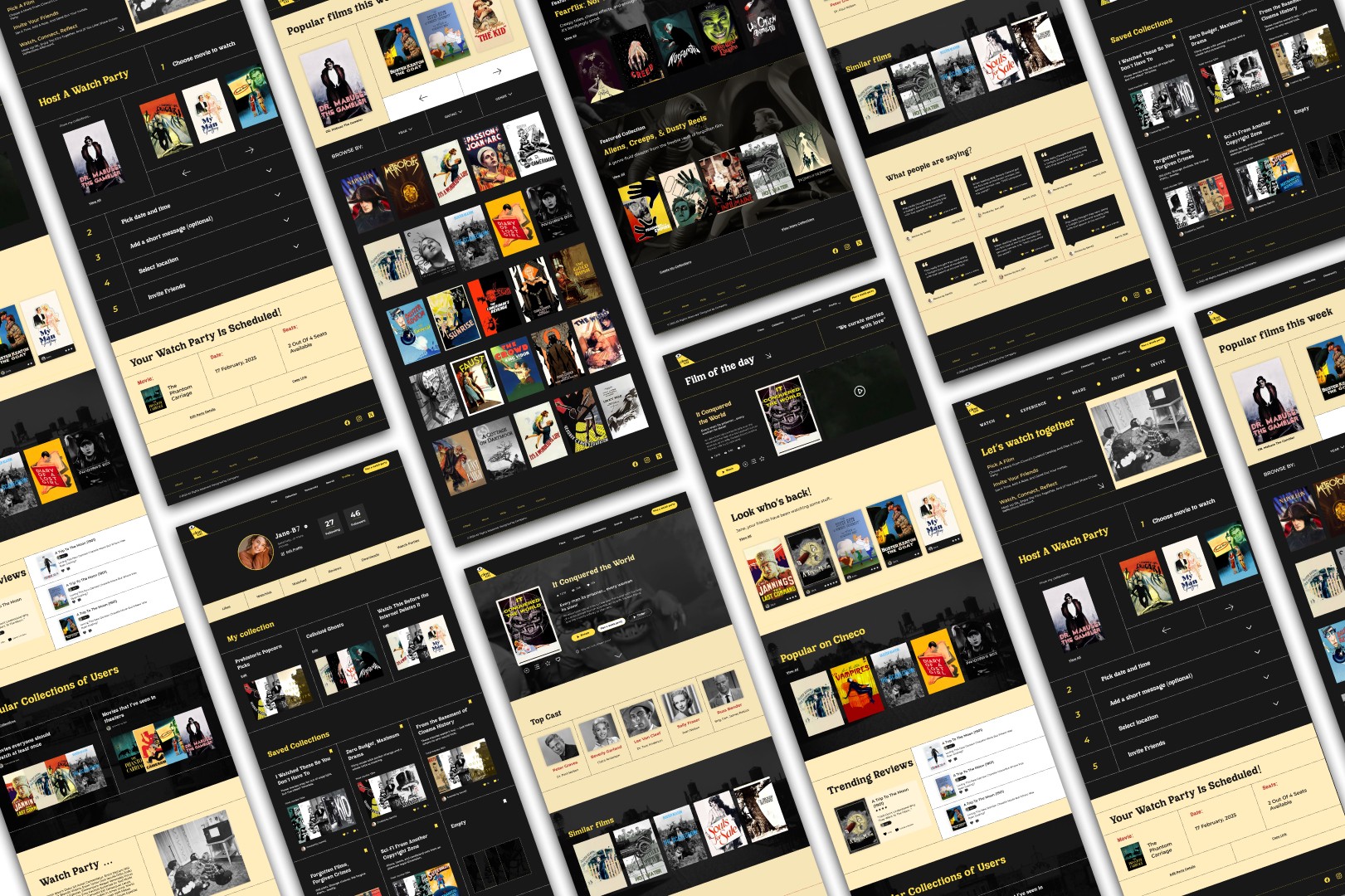
In the final concept, we reimagined streaming as a slower, more intentional form of media consumption, shaped around four guiding principles: Digital Sustainability, Cultural Preservation, Prosocial Design, and Conscious Consumption.
Unlike platforms such as Kanopy or Criterion, which curate cinema but still follow conventional, high-impact streaming models, Cineco centers on public domain films and low-carbon design choices. The platform avoids autoplay, promotes one-time streaming with downloadable access, and encourages shared viewing experiences. These choices were made to reduce environmental strain while fostering a deeper connection between users, content, and culture.
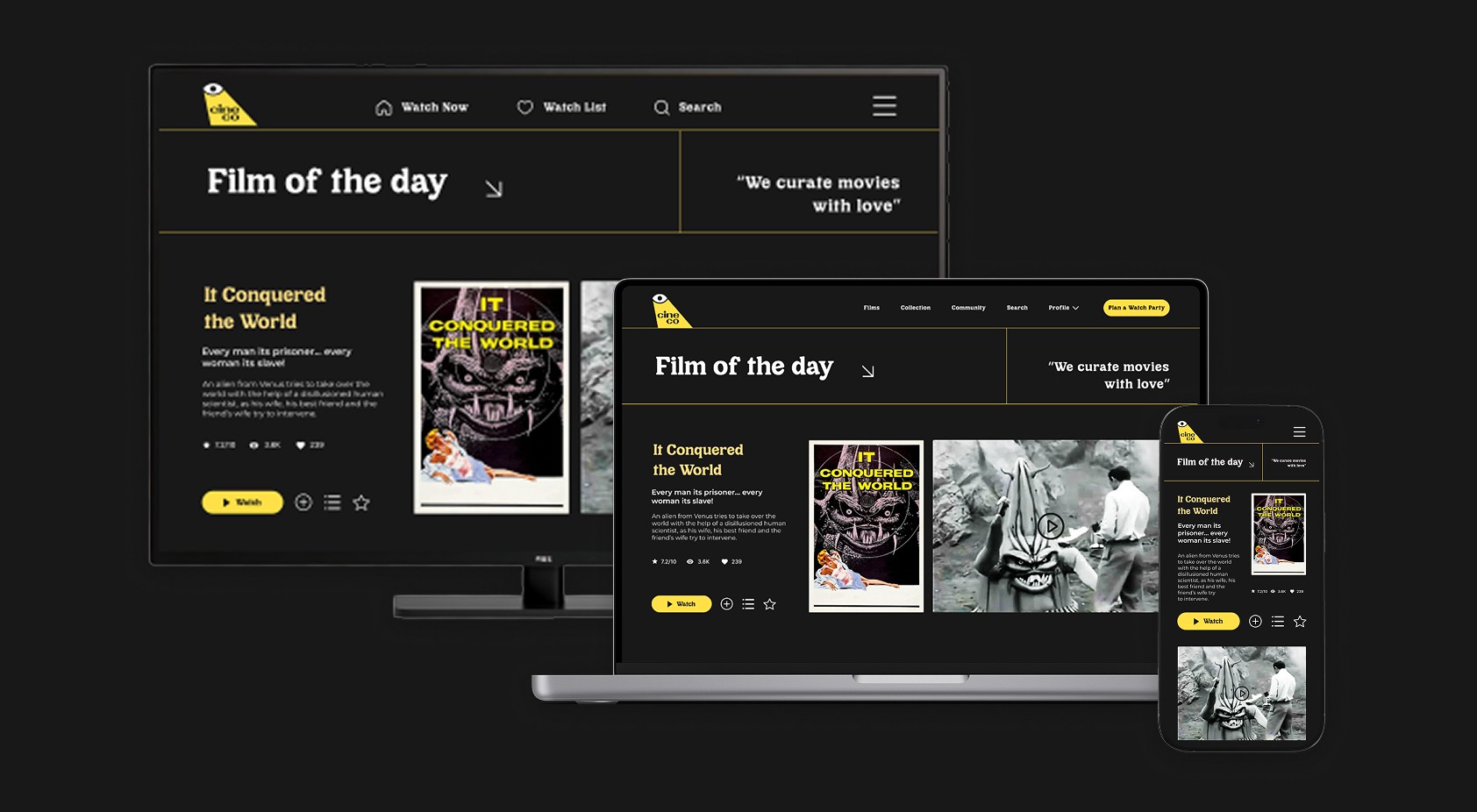
To bring the concept to life, I developed high-fidelity wireframes for the web-based platform. The visual design draws inspiration from classic cinema, using a retro-style interface with a black background and yellow highlights to evoke nostalgia and improve clarity. This aesthetic reinforces Cineco’s archival mission and supports its goal of slowing down the streaming experience.
Throughout this phase, each design decision was guided by user feedback, ethical reflection, and iterative refinement.
Final Concept
Site Map
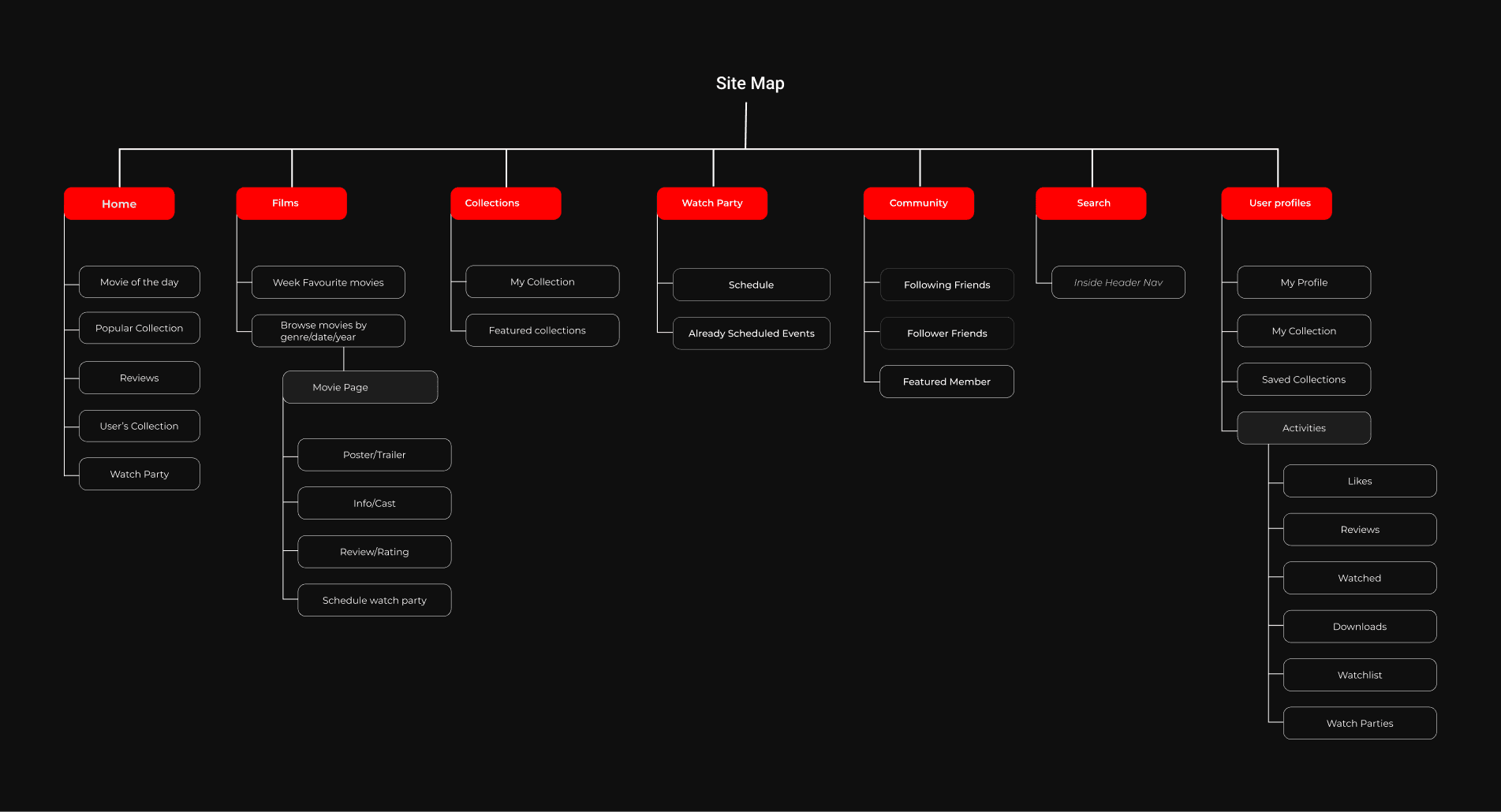
We mapped out each screen and user journey to create a clear and intuitive experience, especially for users unfamiliar with public domain films or sustainable streaming. From exploring curated collections to downloading films and joining watch parties, every interaction was designed to feel simple, thoughtful, and aligned with Cineco’s values of clarity, care, and conscious digital habits.
Final Concept
Digital sustainability
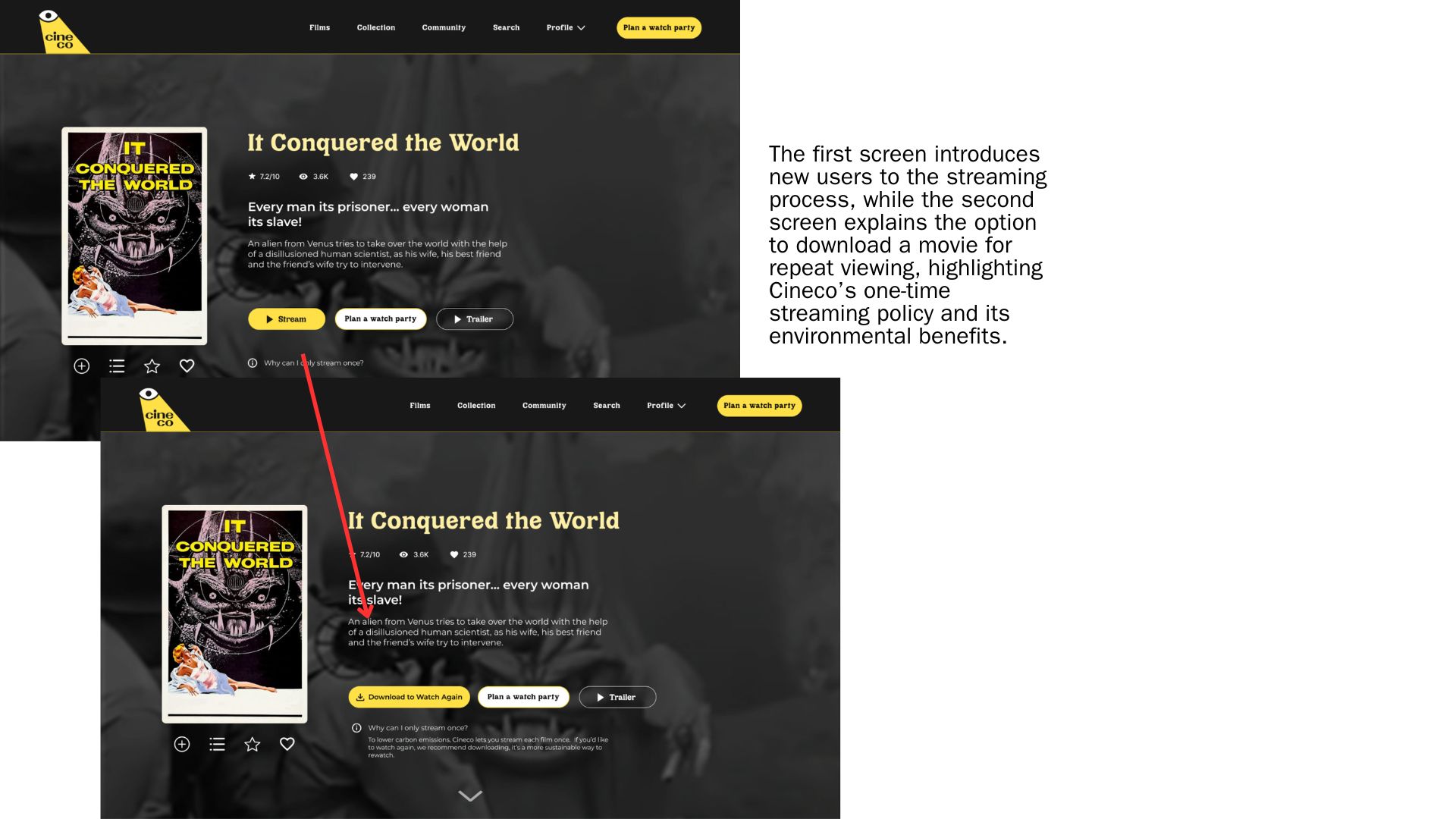
Cineco approaches digital sustainability by integrating mindful interaction patterns that reduce emissions and energy use. The platform encourages one-time streaming with the option to download, promotes shared viewing to avoid duplicate streams, and introduces USB sharing for offline access, minimizing reliance on repeated data transfers.
To further limit unnecessary data consumption, features like autoplay and infinite scrolling were intentionally removed. These choices support Cineco’s goal of slowing down digital consumption and aligning the streaming experience with low-impact, user-conscious design values.
Final Concept
Cultural Preservation
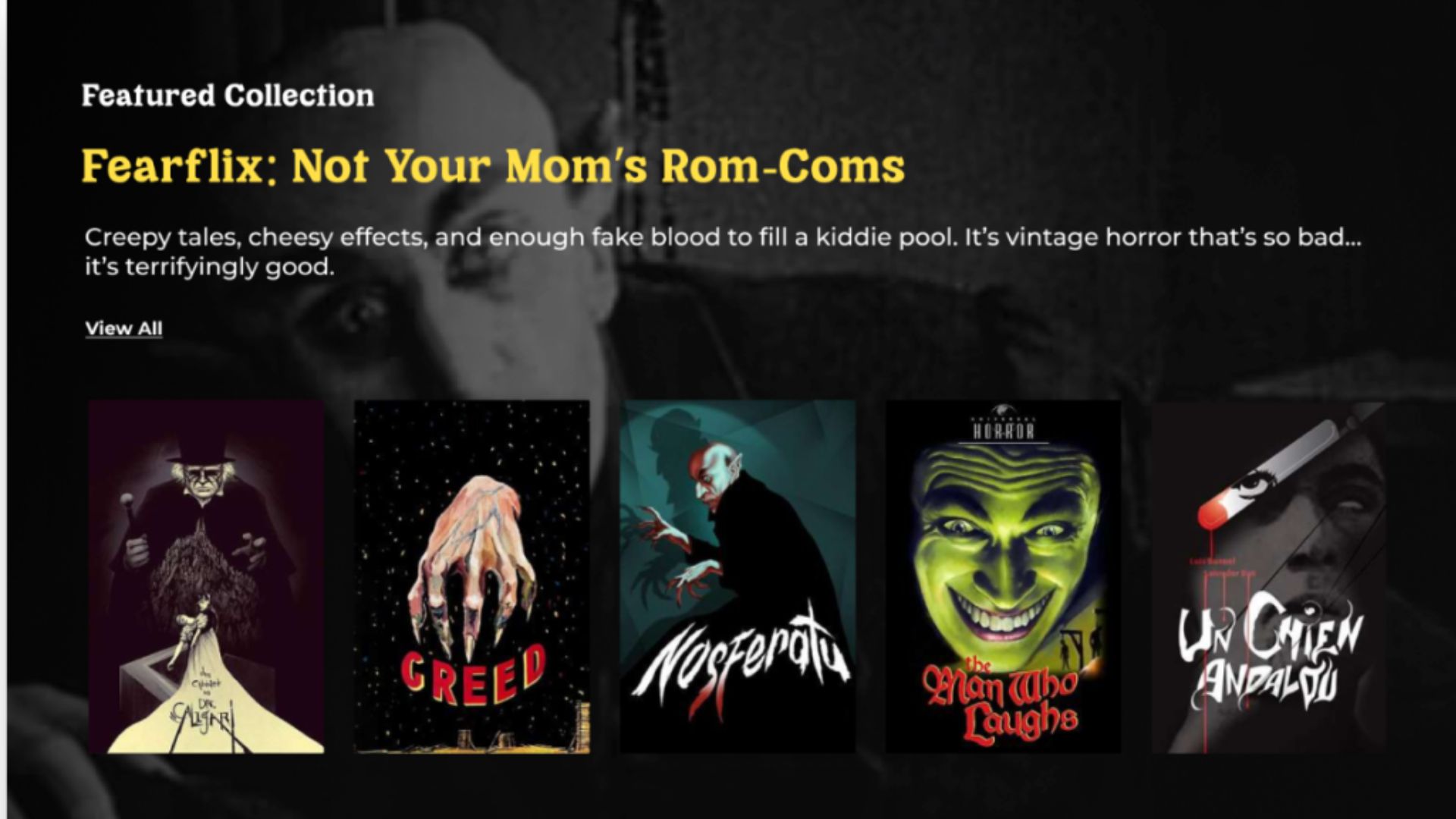
Cultural Preservation is achieved by curating public domain cinema in a more accessible and engaging way than traditional archives, aiming to resurface overlooked cultural works that deserve renewed attention.
Movies are curated into featured collections based on genre, each accompanied by a brief explanation.
Final Concept
Prosocial Design
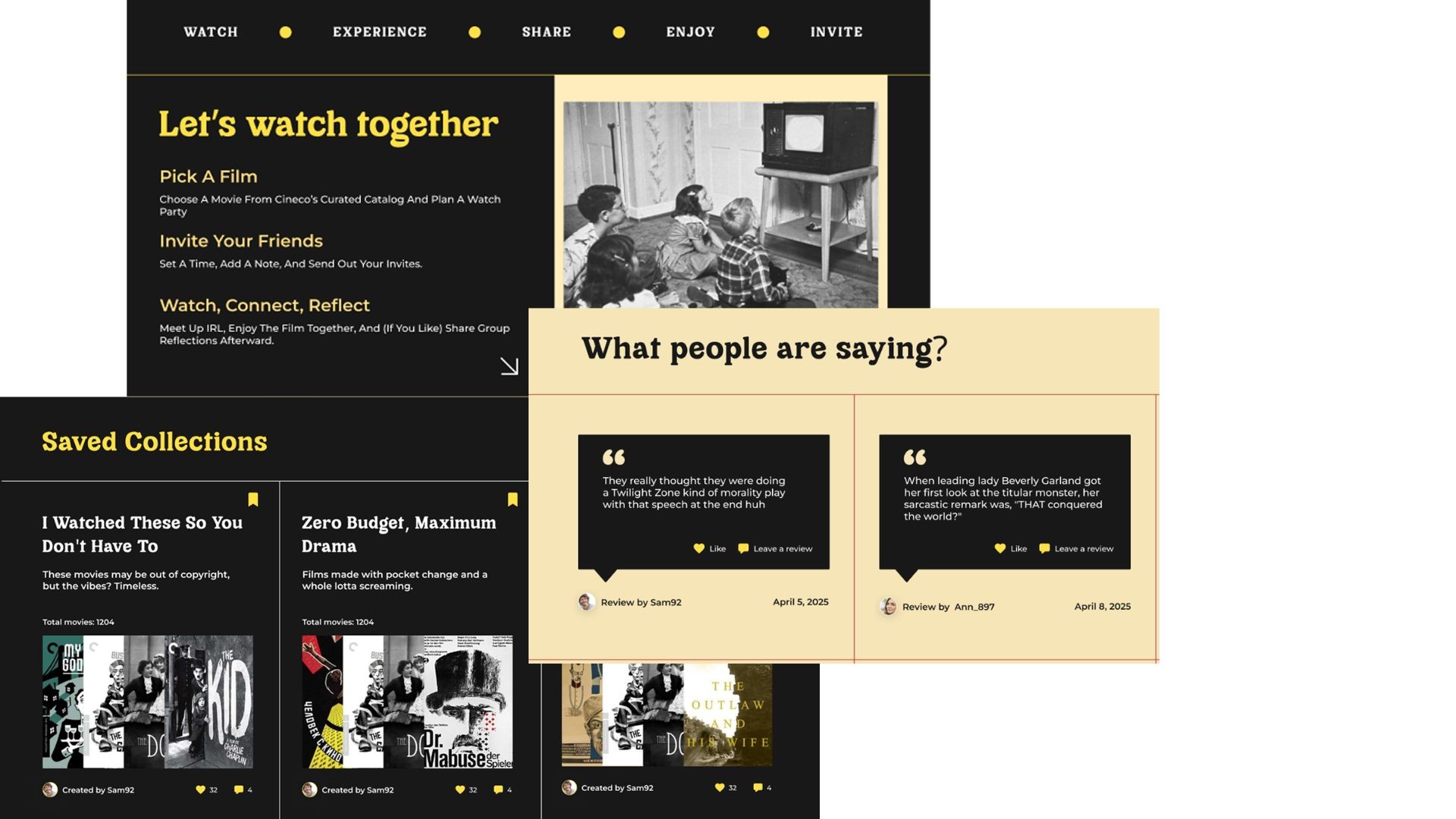
Prosocial design in Cineco turns film watching from a solitary activity into a shared, meaningful experience. Features like watch party planning, community-curated collections, and interactive tools including reviews, shares, and likes encourage users to engage not just with content, but with each other. Rather than relying on gamification, the interface is built to foster a sense of connection, collaboration, and cultural exchange.
Final Concept
Conscious Consumption
Conscious Consumption invites users to engage with media more meaningfully by slowing down the pace of content intake, removing autoplay, prioritizing curated selections, and encouraging moments of reflection, breaks, and thoughtful rewatching.
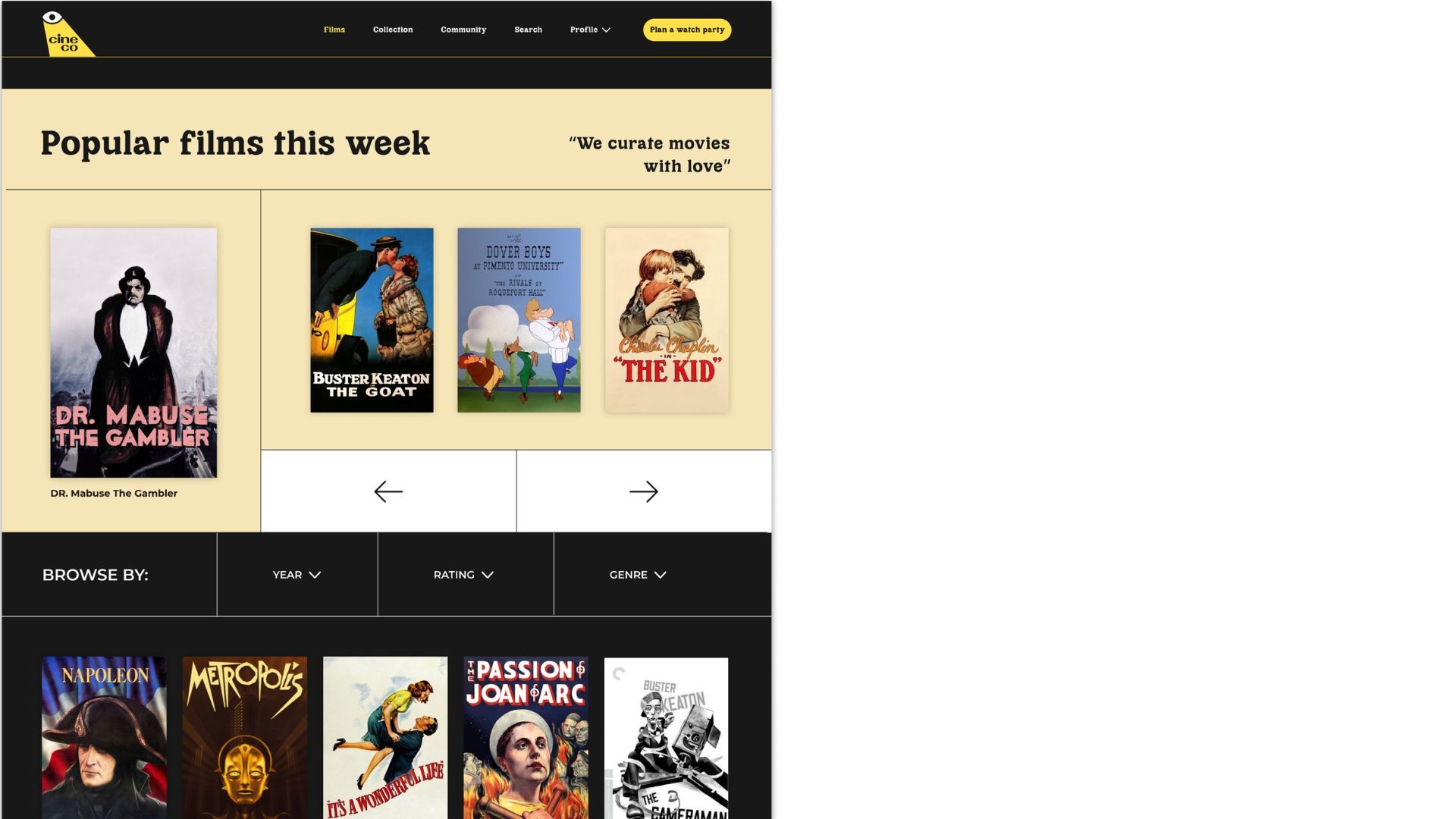
The movie search experience is carefully designed to feel organized and approachable — offering clarity over clutter, especially when compared to the overwhelming layouts of traditional film archives.
Final Concept
User Testing
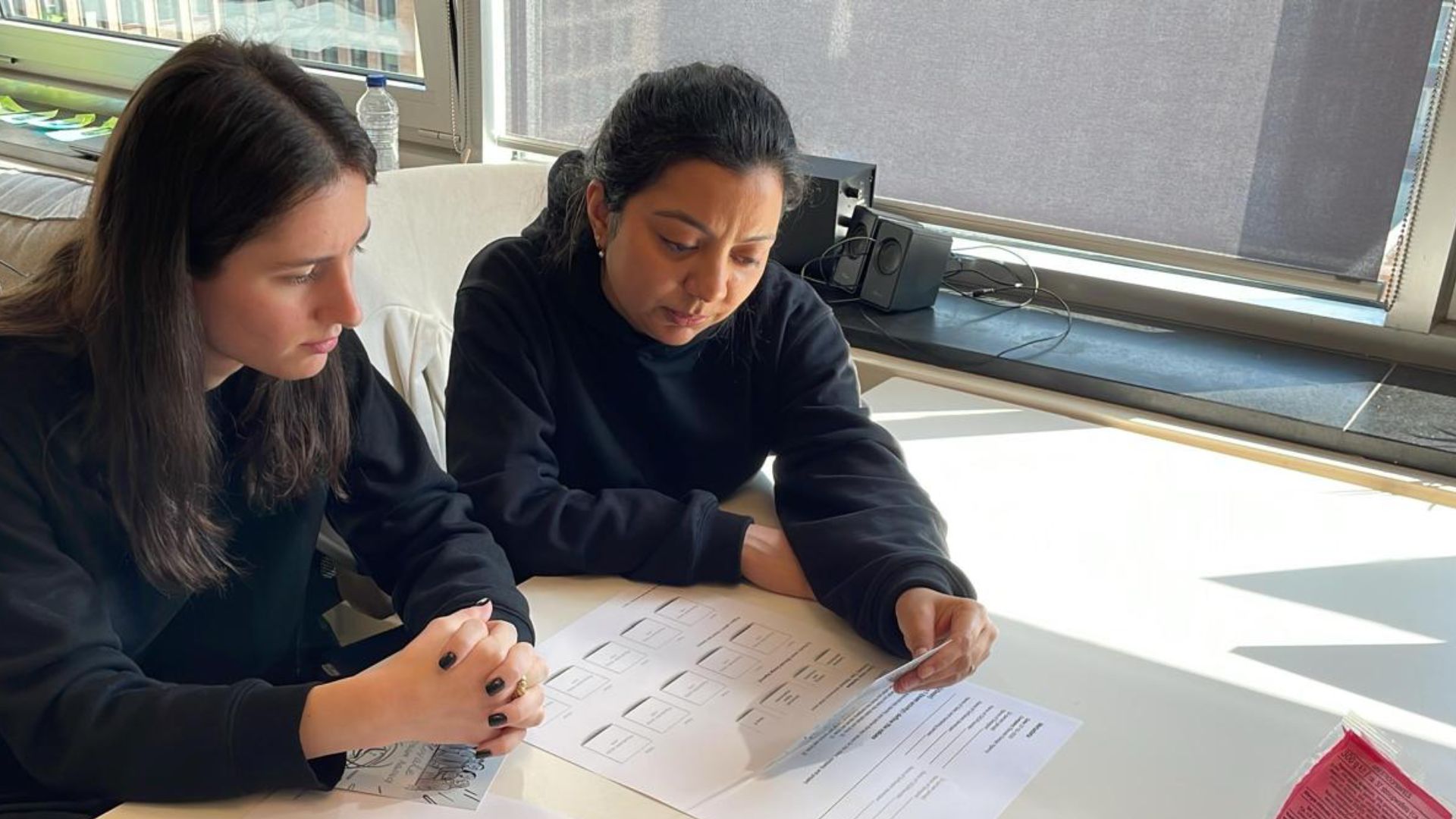
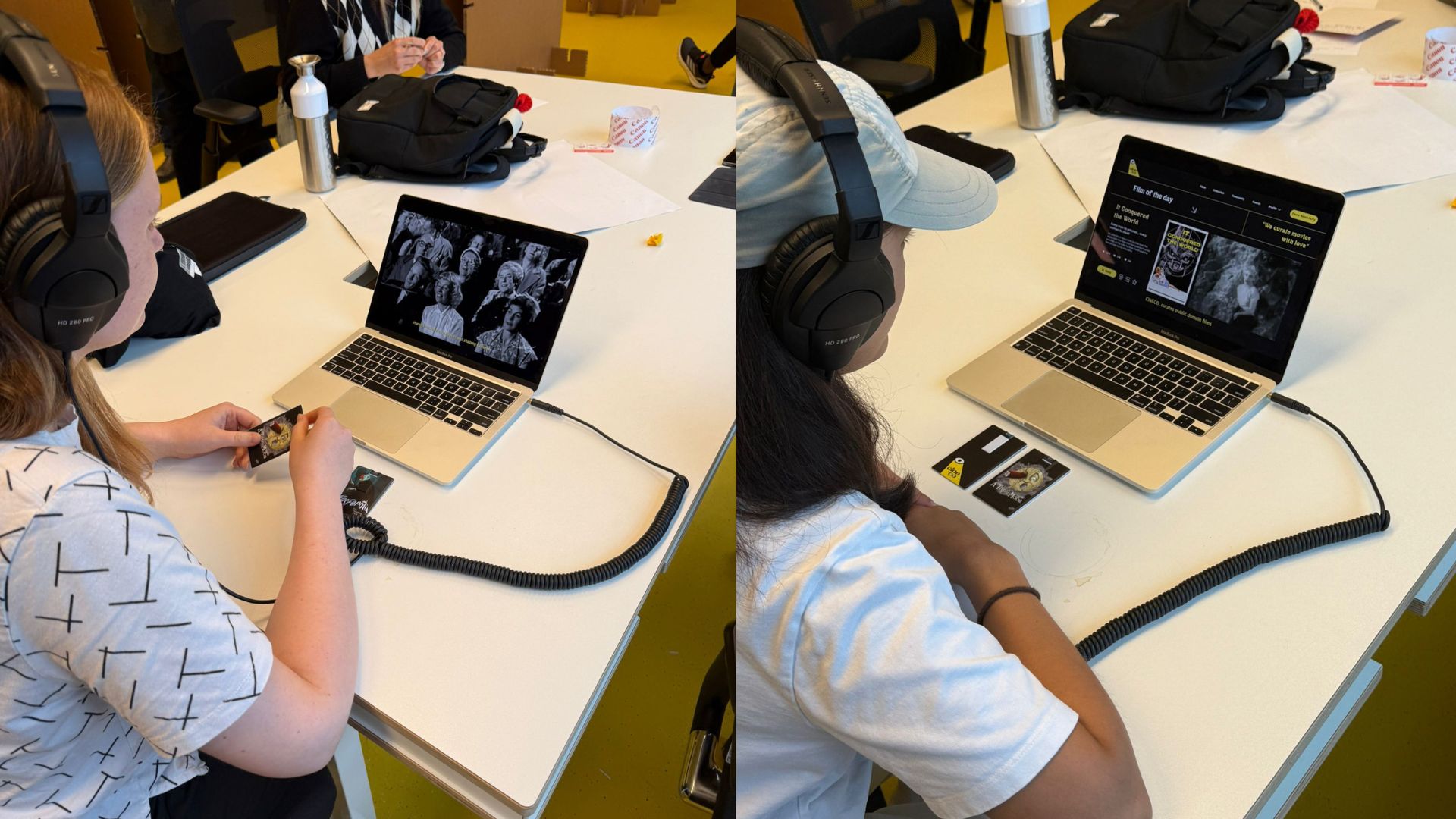
We conducted usability testing with five participants using high-fidelity wireframes to evaluate Cineco’s concept and user experience. Participants appreciated the sustainability-focused features, offline viewing experience, and retro visual identity, while feedback highlighted opportunities to improve onboarding, accessibility, and film discovery through stronger curation and contextual storytelling.
Final Concept
What I learned
Designing Cineco taught me that meaningful, ethical design doesn’t have to rely on flashy incentives or high engagement metrics — it can be quiet, intentional, and rooted in care.
Unlike conventional streaming platforms, Cineco challenges fast digital habits by encouraging mindful consumption through features like one-time streaming, downloadable access, curated collections, and the removal of autoplay. While we can’t change the world with design alone, small, intentional choices can still make an impact.